Fabric that stacks into soft horizontal folds at the head of the window. The warmth of drapery in the space a shade takes up.
A roman shade is one panel of cloth that gathers into folds as it lifts. It gives you the texture and the weight of a fabric treatment, but it lives inside the opening instead of spreading across the wall either side of it.
That makes it the answer in rooms where drapery would be too much and a roller would be too plain: a bedroom, a dining room, a kitchen window over a bench.


The single decision that sets the character. Flat fold is tailored and modern, with crisp horizontal lines. Relaxed drops in a soft smile between the edges. Hobbled keeps a permanent cascade of folds even when the shade is fully down.
Romans want a cloth with enough weight to hold a fold and enough drape not to look stiff. Linens and flax blends do both. A heavy upholstery weight will not fold cleanly and a fine sheer has nothing to hold.
Unlined lets the weave glow and the light through. Lined gives body, protects the face fabric from Florida sun, and makes the folds read more sharply. Blackout is what a bedroom needs.
When a roman is fully up the folds stack at the head and cover part of the glass. On a short window that matters, and we either mount it above the opening or reduce the number of folds.
Cordless as standard in any room a child uses. Motorized where the shade is heavy, out of reach, or part of a run that should move together.
A lined roman softens a bedroom in a way a roller cannot, and with a blackout lining it still does the job at seven in the morning.
All the texture of drapery inside the opening, so the walls either side stay clear for art or joinery.
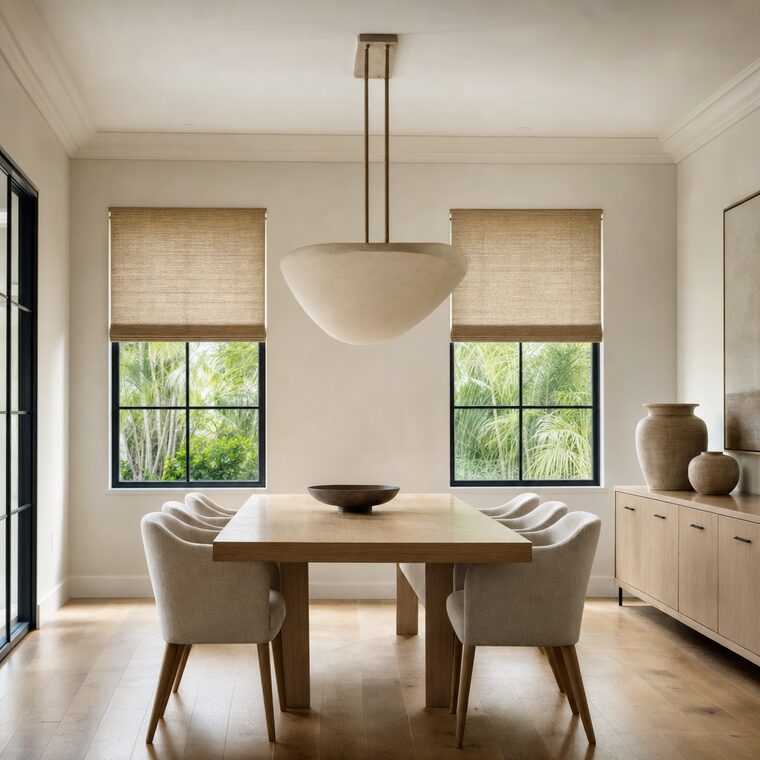
Where a window is wide enough to carry both, a roman does the work of light and privacy and the drapery frames it. We design the pair together so the stack of the roman sits behind the drapery heading and nothing fights.
It is the most impressive way to dress a window and usually the best looking.
About draperyOn a properly made roman, yes, because the fold positions are set by battens sewn into the back rather than left to the fabric. That is most of the difference between a made-to-measure roman and a ready-made one.
Roughly the depth of the stack, which is a few inches on a small shade and more on a tall one. Where the view matters we mount above the opening so the stack sits on the wall, not the glass.
In a performance weave, yes. Natural linen over a bath will take on moisture and stop folding cleanly, so we would specify something else for that room.
In short, yes. There is more fabric and, lined or interlined, more air held against the glass. It is not a cellular shade, but it is the warmest of the flat treatments.
A feather duster, not a vacuum, or follow the manufacturer’s recommended cleaning method. Most romans are not washable because the battens and the cording are sewn in.
The same treatment in three rooms, and what changes between them.

One flat panel, no folds, and nothing on show when it is up. The plainest treatment there is.
See the range →
Grasses and reeds woven into a shade. Texture and a warm filtered light.
See the range →
When the window is big enough to carry fabric across the whole wall rather than inside the opening.
See the range →Book a free in-home consultation. We will bring the samples, take the measurements, and leave you with a proper quote.