An open weave that stops the glare and the heat but leaves the view. The only treatment that lets you keep looking out while it is down.
A solar shade is a mesh rather than a cloth. The weave is open enough to see through and tight enough to cut the sun, which is a combination nothing else on a window manages. Lowered, the room stops squinting and the garden is still there.
It is specified by openness factor, which is the percentage of the weave that is actually holes. That single number decides almost everything about how the shade behaves.

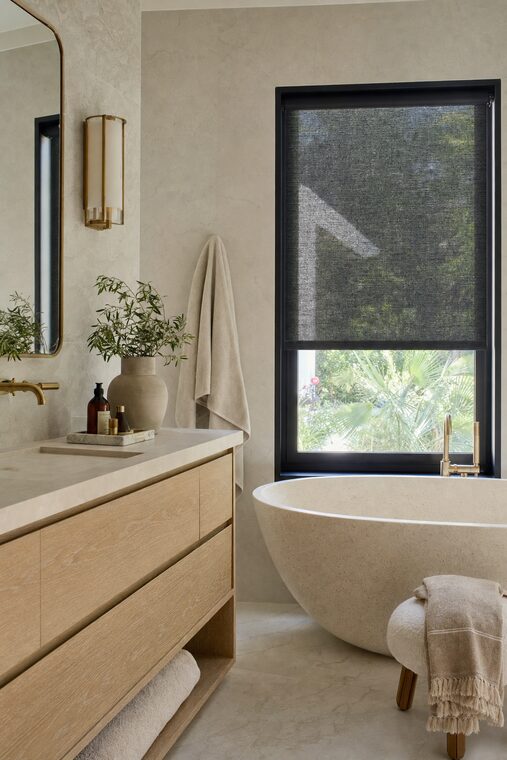

The percentage of the weave that is open. 1 to 3 percent is a dense screen that cuts the most heat and gives the least view. 10 to 14 percent is airy, with a clear view and less protection. 5 percent is where most rooms land.
Counter-intuitive and worth getting right. A dark weave gives the best view out and the least glare, because it absorbs rather than scatters light. A light weave reflects more heat but hazes the view.
A solar shade is a daytime treatment. It works by being darker inside than out, so after dark with the lamps on it reverses and silhouettes show. Anywhere that matters wants a second layer.
Cordless as standard in any room a child uses. Motorized on anything out of reach or wide enough to be heavy, which is most of the windows these end up on.
Inside the recess is tidier. Outside mount catches the light that escapes down the edges, which on a glare problem is often the whole point.
Waterfront, golf course, or garden. A solar screen is the only treatment that solves the glare without taking the reason you bought the house away.
A 3 to 5 percent charcoal screen behind a desk kills the reflection on the monitor and still lets you see out of the window.
Stopping the sun at the glass beats cooling the room afterwards. On a west elevation a dense screen does most of the work of a cellular shade while keeping the view.
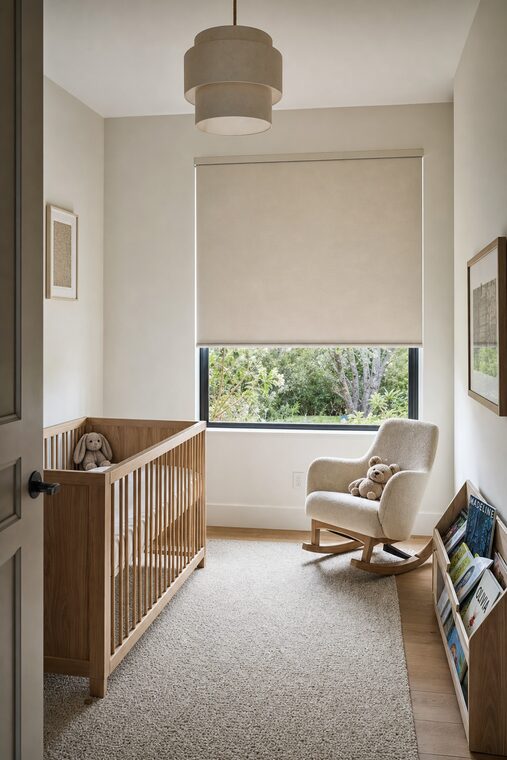
They attack the same problem from opposite ends. A solar screen cuts glare and heat and keeps the view. A cellular shade insulates considerably better but you cannot see through it at all.
Living room with a view: solar. Bedroom, nursery, or a wall you simply want to stop cooking: cellular.
About cellular shades5 percent suits most rooms. Go to 3 percent or lower where glare is severe or the sun is direct, and to 10 percent or higher where the view matters more than the protection.
Because dark absorbs light instead of scattering it, so you get a clearer view out and less haze. Light fabrics reflect more heat but you end up looking at a glowing screen rather than through it.
Yes. With lamps on inside and darkness outside the shade works in reverse and silhouettes are visible. For a street-facing room that matters, we pair it with drapery or a dual roller.
A solar screen cuts a substantial share of UV, which is what protects flooring, art, and upholstery from fading. The denser the weave, the more it stops.
Up to a point, then the tube deflects and the mesh tracks badly. Past that we split the run into matched shades on a shared headrail so it still reads as one line.
Four rooms where the view was the thing worth keeping.

The same mechanism in a solid fabric, from sheer through to blackout.
See the range →
When insulation matters more than the view. The best insulator we sell.
See the range →
Solar screens end up on big glass, which is exactly where a motor earns its keep.
See the range →Book a free in-home consultation. We will bring the samples, take the measurements, and leave you with a proper quote.